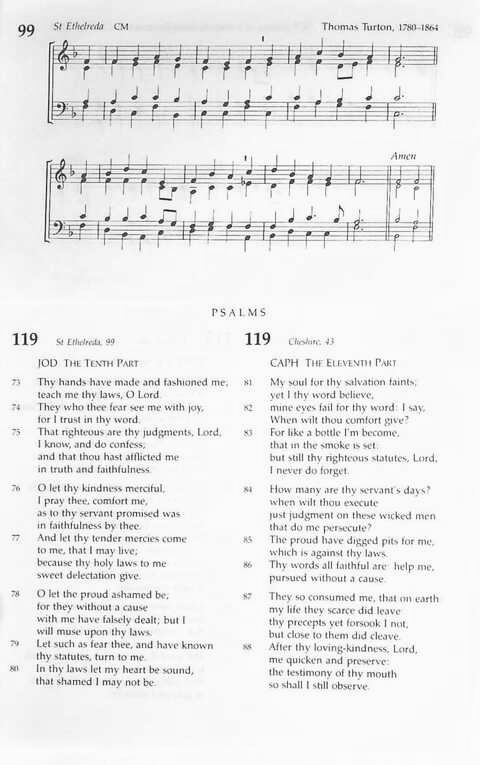
Psalm 119, Jod (vv. 73-80) and Caph (vv. 81-88), tune “St Ethelreda” (Thomas Turton, 1780-1864). From the Irish Presbyterian Hymnbook (2004), no. 119, p. 483.
13th Sunday after Pentecost. August 23, 2026.
Texts from the NRSVUE Bible. According with Un giorno una parola lectionary.
Giovanni Pistone PL
9For we are God’s coworkers, working together; you are God’s field, God’s building. 10According to the grace of God given to me, like a wise master builder I laid a foundation, and someone else is building on it. Let each builder choose with care how to build on it. 11For no one can lay any foundation other than the one that has been laid; that foundation is Jesus Christ. 12Now if anyone builds on the foundation with gold, silver, precious stones, wood, hay, straw— 13the work of each builder will become visible, for the day will disclose it, because it will be revealed with fire, and the fire will test what sort of work each has done. 14If the work that someone has built on the foundation survives, the builder will receive a wage. 15If the work is burned up, the builder will suffer loss; the builder will be saved, but only as through fire. 16Do you not know that you are God’s temple and that God’s Spirit dwells in you? 17If anyone destroys God’s temple, God will destroy that person. For God’s temple is holy, and you are that temple.
Psalm 119 is the longest psalm in the Bible. It has 22 sections, one for each letter of the Hebrew alphabet. In each section, every line starts with the same letter. Today’s reading (vv. 73-80) is the section for the letter Yodh.1 This device does not survive in translation, but it is a sign that the psalm was written to be sung, one letter-section at a time. Some churches still sing it that way: the Irish Presbyterian Hymnbook, for example, still sets these verses to music.2 The letter Yodh is also the smallest letter of the Hebrew alphabet — likely the same letter Jesus means when he says that not even the smallest letter of the Law will pass away (Matthew 5:18, “not one iota, not one dot”). This detail is a reminder: for the first readers of the Bible, God’s word was something written down, letter by letter, not only spoken and remembered by heart.
First Corinthians 3:9-17 comes from a part of the letter where Paul corrects the church in Corinth. The believers there were splitting into groups, each one following a different leader (3:1-4). Paul had just compared the leaders to farm workers: he planted, Apollos watered (3:6-8). Now he changes the picture to a building. He is no longer speaking to just one person — he is speaking to the whole church together.3
Both readings share the same picture: God builds us. The psalm says, “Your hands have made and fashioned me” (v. 73) — God made him, the way a builder makes something with skilled hands. Paul says something similar about the whole church: “you are God’s field, God’s building” (v. 9).4 The psalm is about one person; Paul is about a whole community. But the point is the same: we did not make ourselves. God made us, and God is still building us.
Both readings also say that we need understanding, not just activity. The psalmist asks God for understanding, so that he can learn God’s commandments (v. 73) — simply hearing the law is not enough, we need insight to grasp it.5 Paul calls himself “a wise master builder” (v. 10) and warns that each person building the church “must choose with care” what to build with. Some materials last, like gold, silver, and precious stones. Some do not last, like wood, hay, and straw (v. 12). In the same way, obeying God’s law and building the church both take wisdom, not only effort.
Third, both readings talk about testing, and in both cases the testing is not just punishment. The psalmist says: “I know, O Lord, that your judgments are right, and that in faithfulness you have humbled me” (v. 75). Here, suffering is a sign that God is faithful to him, not a sign that God has left him.6 Paul speaks of a “day” that will test everyone’s work “with fire” (v. 13). The fire will destroy bad work, but even so, “the builder will be saved, but only as through fire” (v. 15). In both readings, the testing does not destroy God’s people — it purifies them.
Fourth, both readings set two kinds of people side by side: the proud and the humble. The psalmist prays, “Let the arrogant be put to shame, for they have subverted me with guile” (v. 78) — people who act with pride and try to deceive him, compared with himself, who simply delights in God’s law (v. 77). Paul says something similar to the divided church in Corinth: “no one can lay any foundation other than the one that has been laid” (v. 11). This means: whoever builds as if their own opinion, or their own group, were the true foundation has misunderstood the church. Only Christ is the foundation.
Finally, both readings move from one person to the whole community. The psalm starts by speaking of “me”: “your hands have made and fashioned me” (v. 73). By the end it looks outward, to others who fear God: “let those who fear you turn to me, so that they may know your decrees” (v. 79). Paul’s picture of the temple (vv. 16-17) goes even further. He says: “you [all of you] are God’s temple, and God’s Spirit dwells in you.” This is no longer many separate people. It is one place where God lives.
To close: I like to read these two texts together. The same hands that made each of us (Psalm 119:73) are, according to Paul, still building today — not only individual people, but a whole community, a temple, built on a foundation that none of us laid and none of us can replace (1 Corinthians 3:11). Along the way — in the psalmist’s suffering, and in the fire of the last day — what is being tested is not whether we belong to this building. What is being tested is how well we have built.
Acknowledgments. This text was produced through the following workflow: G.P. drafted each argument in his own imperfect English; Claude, Anthropic’s AI assistant, corrected the prose, improved its flow, and supplied the detailed references; G.P. then made a final edit.
Psalm 119 is an acrostic poem. In an acrostic, each line (or group of lines) starts with the next letter of the alphabet, in order. Today’s reading (vv. 73-80) is the Yodh section: in Hebrew, every line starts with the same letter, י (Yodh). This device does not survive in English translation, so it helps to see the original Hebrew text.
Hebrew is read from right to left. In the text below, the first word of each verse is in bold. Look at the right-hand edge of each line: every bolded word begins with the same letter, י.
Hebrew text: the Leningrad Codex (Masoretic Text), via Sefaria.org.
9. For we are labourers together with God. Here is the best argument. It is the Lord’s work that we are employed in, and it is to him that we have devoted our labours: hence, as he is faithful and just, he will not disappoint us of our reward. That man, accordingly, is mistaken who looks to men, or depends merely on their remuneration. Here we have an admirable commendation of the ministry — that while God could accomplish the work entirely himself, he calls us, puny mortals, to be as it were his coadjutors, and makes use of us as instruments. It corresponds admirably with the Apostle’s design to understand him to mean, that, while it is peculiarly the work of God to build his temple, or cultivate his vineyard, he calls forth ministers to be fellow-labourers, by means of whom He alone works; but, at the same time, in such a way, that they in their turn labour in common with him.
Ye are God’s husbandry, ye are God’s building. These expressions may be explained in two ways. They may be taken actively, in this sense: “You have been planted in the Lord’s field by the labour of men in such a way, that our heavenly Father himself is the true Husbandman, and the Author of this plantation. You have been built up by men in such a way, that he himself is the true Master-builder.” Or it may be taken in a passive sense: “In labouring to till you, and to sow the word of God among you and water it, we have not done this on our own account, or with a view to advantage to accrue to us, but have devoted our service to the Lord.” This latter interpretation I rather prefer, for I am of opinion that Paul meant here to express the idea, that true ministers labour not for themselves, but for the Lord. Hence it follows, that the Corinthians were greatly to blame in devoting themselves to men, while of right they belonged exclusively to God.
10. As a wise master-builder. It is a most apt similitude, and accordingly it is frequently met with in the Scriptures. Here the Apostle declares his fidelity with great confidence, as it required to be asserted in opposition not merely to the calumnies of the wicked, but also to the pride of the Corinthians, who had already begun to despise his doctrine. The more, therefore, they lowered him, so much the higher does he raise himself up, and declares that he had been the first master-builder of God among them in laying the foundation, and that he had with wisdom executed that department of duty, and that it remained that others should go forward in the same manner, regulating the superstructure in conformity with the rule of the foundation. Two things he prohibits them from doing: they must not venture to lay another foundation, and they must not raise a superstructure that will not be answerable to the foundation.
11. For other foundation can no man lay. This statement consists of two parts: first, that Christ is the only foundation of the Church; and secondly, that the Corinthians had been rightly founded upon Christ through Paul’s preaching. The sum is this — that the Church must by all means be founded upon Christ alone, and that Paul had executed this department of duty so faithfully that nothing could be found to be wanting in his ministry. Hence, whoever may come after him can in no other way serve the Lord with a good conscience, or be listened to as ministers of Christ, than by studying to make their doctrine correspond with his, and retain the foundation which he has laid.
12. Now if any man build upon this foundation. He pursues still farther the metaphor. It would not have been enough to have laid the foundation if the entire superstructure did not correspond; for as it were an absurd thing to raise a structure of vile materials on a foundation of gold, so it were greatly criminal to bury Christ under a mass of strange doctrines. By gold, and silver, and precious stones, he means doctrine worthy of Christ, and of such a nature as to be a superstructure corresponding to such a foundation. By wood, stubble, and hay is meant doctrine not answering to the foundation, such as is forged in men’s brain, and is thrust in upon us as though it were the oracles of God. For God will have his Church trained up by the pure preaching of his own word, not by the contrivances of men.
13. For the day will declare it. With propriety we give the name of day to the time when darkness and obscurity are dispelled, and the truth is brought to light. Hence the Apostle forewarns us, that it cannot always remain a secret who have acted fraudulently in the work of the Lord, or who have conducted themselves with fidelity, as though he had said: “The darkness will not always remain: the light will one day break forth, which will make all things manifest.” Because it will be revealed by fire. Paul, having spoken of doctrine metaphorically, now also applies metaphorically the name of fire to the very touchstone of doctrine. The fire, then, here meant is the Spirit of the Lord, who tries by his touchstone what doctrine resembles gold and what resembles stubble. The nearer the doctrine of God is brought to this fire, so much the brighter will be its lustre; on the other hand, what has had its origin in man’s head will quickly vanish, as stubble is consumed in the fire.
14-15. If any man’s work abide… If any man’s work shall be burned. His meaning is, that those are fools who depend on man’s estimation, so as to reckon it enough to be approved by men, for then only will the work have praise and recompense when it has stood the test of the day of the Lord. He himself shall be saved, yet so as by fire. It is certain that Paul speaks of those who, while always retaining the foundation, mix hay with gold, stubble with silver, and wood with precious stones — that is, those who build upon Christ, but in consequence of the weakness of the flesh admit something that is man’s, or through ignorance turn aside to some extent from the strict purity of God’s word. Such persons, Paul says, could be saved, but on this condition — if the Lord wiped away their ignorance, and purged them from all dross, as gold is refined in the furnace.
16. Know ye not that ye are the temple of God. Having admonished the teachers as to their duty, he now addresses himself to the pupils, that they too may take heed to themselves. To the teachers he had said, “You are the master-builders of the house of God.” He now says to the people, “You are the temples of God; it is your part, therefore, to take care that you be not in any way defiled.” He speaks of all of them collectively as being one temple of God; for every believer is a living stone, for the rearing up of the building of God. And the Spirit of God dwelleth in you. Here we have the reason why they are the temple of God: because he dwells in them by his Spirit, for no unclean place can be the habitation of God.
17. If any man defile the temple of God, him shall God destroy. He subjoins a dreadful threatening — that, as the temple of God ought to be inviolably sacred, that man, whoever he may be, that corrupts it will not pass with impunity. As that faith which is devoted to the pure doctrine of Christ sanctifies our souls for the right and pure worship of God, so, as soon as we are tinctured with the contrivances of men, the temple of God is polluted, as it were, with filth, because the sacrifice of faith, which he claims for himself alone, is in that case offered to creatures.
Source: John Calvin, Commentary on the Epistles of Paul the Apostle to the Corinthians, vol. 1, trans. John Pringle (Edinburgh: Calvin Translation Society, 1848), on 1 Corinthians 3:9-17. Public domain; digitized by the Christian Classics Ethereal Library (ccel.org).
Psalm 119, Jod (vv. 73-80) and Caph (vv. 81-88), tune “St Ethelreda” (Thomas Turton, 1780-1864). From the Irish Presbyterian Hymnbook (2004), no. 119, p. 483.
Se volessimo spiegare o commentare questo lunghissimo Salmo, dovremmo esaminare e parafrasare ognuno dei suoi doppi 176 versi. In sostanza però si può riassumere il suo contenuto dicendo che il lungo canto è stato probabilmente composto da un maestro allo scopo di destare nei giovani discepoli l’amore di Dio e la passione del Suo insegnamento, di suscitare in loro il fermo proposito di adempiere alle Sue norme e la calda volontà di tenere una vita onesta. Vi si sente l’anima semplice e fervida allo stesso tempo d’un modesto poeta innamorato della Torah e desideroso di infondere nei giovani cuori degli scolari questa sua ardente passione. Travers Herford ci ha veduto rispecchiata l’idea che i farisei si facevano della Torah. Benamozegh vi ha scoperto spunti nuovi, ignoti ad altri Salmi, come per esempio lo studio costante della Torah e cenni e consuetudini di ascetismo come la preghiera di mezzanotte e quindi una stretta analogia tra la predicazione profetica e l’insegnamento della tradizione farisaica.
Abbiamo già detto sopra che questo Salmo di 176 versi è il più lungo di tutti ed è diviso in 22 stanze in ordine alfabetico di otto versi ciascuna. Così lungo canto, costretto in rotaie alfabetiche e ispirato a motivi limitatissimi, doveva costringere l’autore ad una evidente monotonia ed uniformità di accenti, ad un artificioso e difettoso nesso fra i versi e a continue ripetizioni, come se un pittore, disponendo sulla sua tavolozza di dieci colori, ne adoperasse ora l’uno ora l’altro per comporre il suo quadro. Però quasi ogni verso o una breve sequela di versi presentano un pensiero nobile, una sete di virtù, una passione di Dio calorosissima. Chayes afferma, a nome di un innominato sapiente, che gli otto termini con cui è designata la Torah, quanti egli ne conta (non comprendendovi dérech ed emunàh) sono tolti dal Salmo XIX vv. 8-11; la parentela fra questo e il nostro Salmo è infatti evidente perché in sostanza si tratta in tutti e due dell’elogio della Torah.
Il Gordon chiama il Salmo CXIX un grande inno «in onore della Torah» nello spirito del profetismo; l’esercizio dei propri doveri, lo studio, la meditazione, il quotidiano approfondimento della Scrittura sono infatti i temi prevalenti dell’inno.
Volere determinare l’autore e l’epoca della composizione sarebbe impresa ardua e non necessaria. Nella composizione del Salmo ricorrono con una costanza forse artificiosa tutti i termini con cui si usò rappresentare l’insegnamento e la varia dottrina e materia della parola biblica. Sono dieci vocaboli che formano il tessuto e i fili del Salmo o i suoi colori: dérech (via, strada, condotta), Toràh (insegnamento, dottrina), ’eduth (testimonianza), piqqùd (ordine), choq (statuto), mizvàh (comandamento), mishpath (legge), davàr (parola), imràh (detto, proposizione, premessa), emunàh (fedeltà), tutti termini che indicano ora l’uno ora l’altro aspetto della Torah e investono tutta la vita morale dell’uomo ebreo.
RaDaQ comincia il suo commento al Salmo collo spiegare le varie voci con cui sono indicate le parti o elencati gli elementi della Torah, che, anche secondo lui, ammontano a dieci. Torah, indicherebbe la specie, il carattere o la qualità del precetto e il modo della sua esecuzione, così si direbbe Toràth ha-ashàm, la legge relativa al sacrifizio di pentimento (Levitico, VII, 1); dérech è la condotta virtuosa, il retto comportamento, o, come egli lo chiama, il tiqqùn ha-mizvòth (o ha-middoth?) che è la meta a cui mirano i comandamenti della legge cioè la imitatio dei; chuqqìm sarebbero i precetti di cui ci è ignota la ragione, sia che essa trascenda l’umano intelletto o non sia stata dichiarata esplicitamente; mizvòth sono i doveri che si portano questo nome come il mancato adempimento dei voti; mishpath indicherebbe le norme che governano i rapporti sociali e i contatti umani; ’eduth designerebbe le cerimonie commemorative o i riti che servono a ricordare qualche dovere pubblico o privato come il sabato, lo zizzith, i tefillin e simili; piqqudim sarebbero quei precetti razionali che rappresentano una specie di deposito (piqqadòn) o una cosa chiusa e serbata nel cuore umano (definizione poco chiara e di cui il celebre esegeta medioevale non porta alcun esempio esplicativo); zédeq vorrebbe essere la giustificazione dei precetti, cioè la dimostrazione della loro retta e giusta natura; dibbùr e amirah sarebbe un termine generale per indicare i comandamenti o le promesse fatte da Dio, come davàr sarebbe l’attributo della divina volontà nella creazione del mondo, emunàh, la parola serbata, la promessa data e mantenuta all’atto della creazione.
Il Castellino pure nel suo commento (pag. 746) dà la spiegazione di quei termini stessi cominciando da davàr (logos), voce secondo lui generica per le comunicazioni di Dio; imràh (lòghion), pronunciamento di Dio in forma più solenne; choq e chuqqim (dikaiòmata), brevi statuti o decreti; mishpath (krímata), sentenza o prescrizione giudiziaria e quindi giudizio; Torah (nòmos), il corpo della legge ed anche una sua prescrizione singola, mizvah (entolè), comando, precetto del Pentateuco e dei profeti; edàh, edòth (marturìa), testimonianze o attestazioni asseverative di Dio, piqqudim (dikaiòmata), comandi, ordini. Volendo darne la versione latina quelle voci si tradurrebbero così: Torah = lex, eduth = testimonia, piqqudim = mandata, chuqqim = leges, mizvoth = praecepta, mishpatim = iudicia, davàr o imràh = parola; tutti però avrebbero, secondo il commentatore francese più volte citato, il senso generale di legge divina senza alcuna sfumatura fra quelle distinzioni o mature fra precetti religiosi, politici, naturali o giuridici che esegeti ebrei e cristiani vi hanno intravveduto.
Source: Dante Lattes, Il Libro dei Salmi (Rome: Unione delle Comunità Israelitiche Italiane, 1963), 466-468.
See Dante Lattes, Il Libro dei Salmi (Rome: Unione delle Comunità Israelitiche Italiane, 1963).↩︎
Irish Presbyterian Hymnbook (2004), no. 119, https://hymnary.org/hymn/IPH2004/page/483.↩︎
See Richard B. Hays, First Corinthians, Interpretation (Louisville: John Knox Press, 1997), on this passage. Italian translation: I Corinzi, Strumenti 63 (Torino: Claudiana, 2013).↩︎
See the appendix below, an excerpt from John Calvin’s commentary on this passage.↩︎
Psalm 119 uses about ten different Hebrew words for God’s law — torah, choq, mishpath, mizvah, and others — and each one points to a different side of it: teaching, statute, judgment, commandment, promise. That variety is itself a lesson in the kind of understanding this verse asks for. See the appendix below, an excerpt from Dante Lattes, Il Libro dei Salmi (Rome: Unione delle Comunità Israelitiche Italiane, 1963), 467-468.↩︎
This echoes verse 67, just before today’s reading: “Before I was afflicted I went astray, but now I keep your word.”↩︎